NatWorks Transformation is proud — and deeply honoured — to announce that our Managing Director and Founder, Mr. Kamlesh Kumar Pathak, will speak at UNCCD COP17, the seventeenth session of the Conference of the Parties to the United Nations Convention to Combat Desertification, taking place in Ulaanbaatar, Mongolia, in 2026. On Wednesday, 26 August 2026, he will join a distinguished international panel for the session "Rangeland Restoration Finance, Carbon, Investment and Regional Scale-up", from 12:00 to 13:30 in Tsagaadai Hall, Green Zone.
For everyone at NatWorks, this announcement carries a special resonance. One line captures what this moment means for our team: "From Egypt's mangroves to Mongolia's rangelands — NatWorks takes restoration to the world stage." On 26 August, that sentence stops being a slogan and becomes a matter of record. Our Managing Director will sit alongside representatives of some of the world's most respected land, climate and development institutions, speaking on the very subjects to which he has devoted more than two decades of his professional life.
Mr. Pathak joins the panel in his capacity as Advisory Board Member of the FRIENDSHIP Science Hub, a role that reflects both his long-standing engagement with Mongolia and the trust that international partners place in his judgment on restoration, carbon and climate finance.
A Global Stage for Land Restoration
The United Nations Convention to Combat Desertification is one of the three Rio Conventions — the multilateral agreements born of the 1992 Earth Summit — and the only one dedicated squarely to land: its degradation, its restoration, and the hundreds of millions of livelihoods that depend on its health. Every two years, the Convention's Conference of the Parties gathers governments, scientists, financiers and civil society to negotiate how the world will halt and reverse the loss of productive land. In 2026, that gathering comes to Ulaanbaatar under a tagline that could hardly be more fitting: "Restoring Land. Restoring Hope."
Mongolia is a profoundly appropriate host. Its vast steppe has sustained a mobile herding culture for centuries, and its rangelands — like rangelands across Central Asia, Africa and beyond — today face mounting pressure from overgrazing, a changing climate and creeping degradation. Rangelands are among the world's largest land-based ecosystems, yet they have historically received only a fraction of the restoration finance directed at forests and farmland. Closing that gap — finding credible ways to channel carbon revenues, private investment and public funds into the hands of herders and land stewards — is one of the defining challenges of this decade of restoration. It is precisely the challenge this session takes on.
Inside the Session
"Rangeland Restoration Finance, Carbon, Investment and Regional Scale-up" brings together practitioners who have spent their careers where policy meets pasture. Over ninety minutes, the panel will explore how rangeland restoration can be financed at meaningful scale: what credible carbon projects on the steppe actually look like, how investment models can be structured so that benefits reach herding communities, what role multilateral finance and science partnerships should play, and how successful pilots can be scaled across whole regions rather than remaining isolated bright spots.
For Mr. Pathak, these are not abstract questions. They are the daily working material of the projects he leads — and the panel format, moderated by the Woodwell Climate Research Center, promises a candid, practice-grounded conversation rather than a sequence of prepared statements.

The Company He Keeps
The calibre of a panel says a great deal about the regard in which its speakers are held. Mr. Pathak takes the stage alongside colleagues drawn from the United Nations system, leading climate science institutions and frontline development organisations:
- Heba Al HariryLand and Water Officer, Food and Agriculture Organization of the United Nations (FAO)
- Kamlesh Kumar Pathak NatWorks MDAdvisory Board Member, FRIENDSHIP Science Hub
- Jennifer WattsCo-Director of Rangelands, Woodwell Climate Research Center
- Emmanuel SeckExecutive Director, ENDA Energie · UNCCD IWG-FSF member · GNDR Global Chair
- Manon LeLargeProgramme Officer for Livestock, Animal Health and Veterinary Public Health, Agronomes et Vétérinaires Sans Frontières (AVSF)
- Jamie Cummings ModeratorSenior Policy Analyst, Woodwell Climate Research Center
FAO. Woodwell Climate Research Center. ENDA Energie. AVSF. These are institutions whose work shapes how the world understands and finances land restoration — and among them sits our Managing Director, representing the FRIENDSHIP Science Hub advisory board and, with it, the body of work NatWorks has built across continents. It is company he has earned.
The Journey That Led Here
Invitations of this kind are not extended lightly; they are the compound interest of a career. For more than twenty years, Mr. Pathak has worked at the intersection of environment, development and finance, advising governments, enterprises and international programmes across more than a dozen countries — as Managing Director and Founder of NatWorks Transformation and as CEO of GreenWorks Consulting.
His relationship with Mongolia runs especially deep. As Chief Technical Advisor of the EU–Mongolia Friendship Project, he helped steer one of the country's flagship international cooperation efforts, and in February 2025 he was a key speaker at its Best Practice Forum in Ulaanbaatar — a role we celebrated on these very pages. Today he leads the D-CAMP Mongolia carbon project, working to bring credible carbon methodologies to the country's rangelands and the herding communities who steward them.
The other half of the story unfolds far from the steppe, on the shores of the Red Sea. There, Mr. Pathak leads Egypt's Red Sea mangrove restoration initiative — an ambitious programme covering 6,406 hectares and targeting the sequestration of 5.27 million tonnes of CO₂ equivalent over twenty years. Alongside it, the STEP Programme extends his conviction that environmental transformation must be paired with skills, livelihoods and local ownership if it is to last.
There is a quiet symmetry in this moment that none of us at NatWorks have missed. The city where Mr. Pathak spent years building partnerships, advising ministries and championing best practice is the same city that now welcomes him to a United Nations stage. Ulaanbaatar is not a stop on his itinerary; it is a chapter of his career. COP17 simply gives that chapter the audience it deserves.
A Leader Worth Celebrating
It would be possible to write this announcement in the neutral language of press releases — and it would miss the point entirely. Because for those of us who work with Mr. Pathak every day, this invitation is personal. We know the man behind the designations: the mentor who makes time for the youngest analyst's questions with the same seriousness he brings to a ministerial briefing; the leader whose first instinct on any project is to get into the field, walk the land, and listen to the people who live on it before a single document is drafted.
His colleagues speak of his integrity as a working method rather than a slogan — commitments kept, credit shared, difficult truths delivered kindly but plainly. Partners across twelve countries know him as the advisor who stays engaged long after the contract concludes, because for him restoration has never been a deliverable; it is a responsibility. That he now carries these qualities onto the floor of a UN Conference of the Parties fills every member of the NatWorks and GreenWorks family with genuine, uncomplicated pride.
"To speak at COP17 is not a personal milestone — it is a recognition of every colleague, partner and community that has worked beside us, in the mangroves, on the steppe, and everywhere land and people meet. I travel to Ulaanbaatar carrying their work, and my only ambition is to represent it faithfully."
— Mr. Kamlesh Kumar Pathak, Managing Director & Founder, NatWorks TransformationCharacteristically, he deflects the spotlight. We, just as characteristically, insist on shining it. Congratulations, Sir — this stage has been a long time coming, and no one has earned it more honestly.
On the Ground in Ulaanbaatar
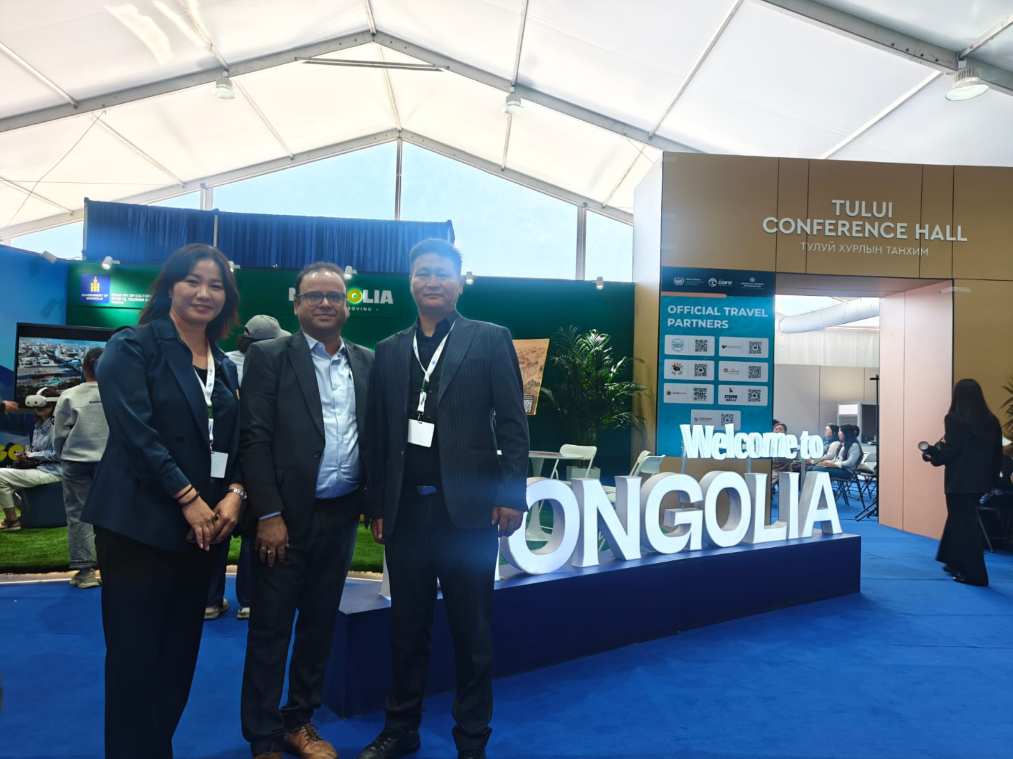
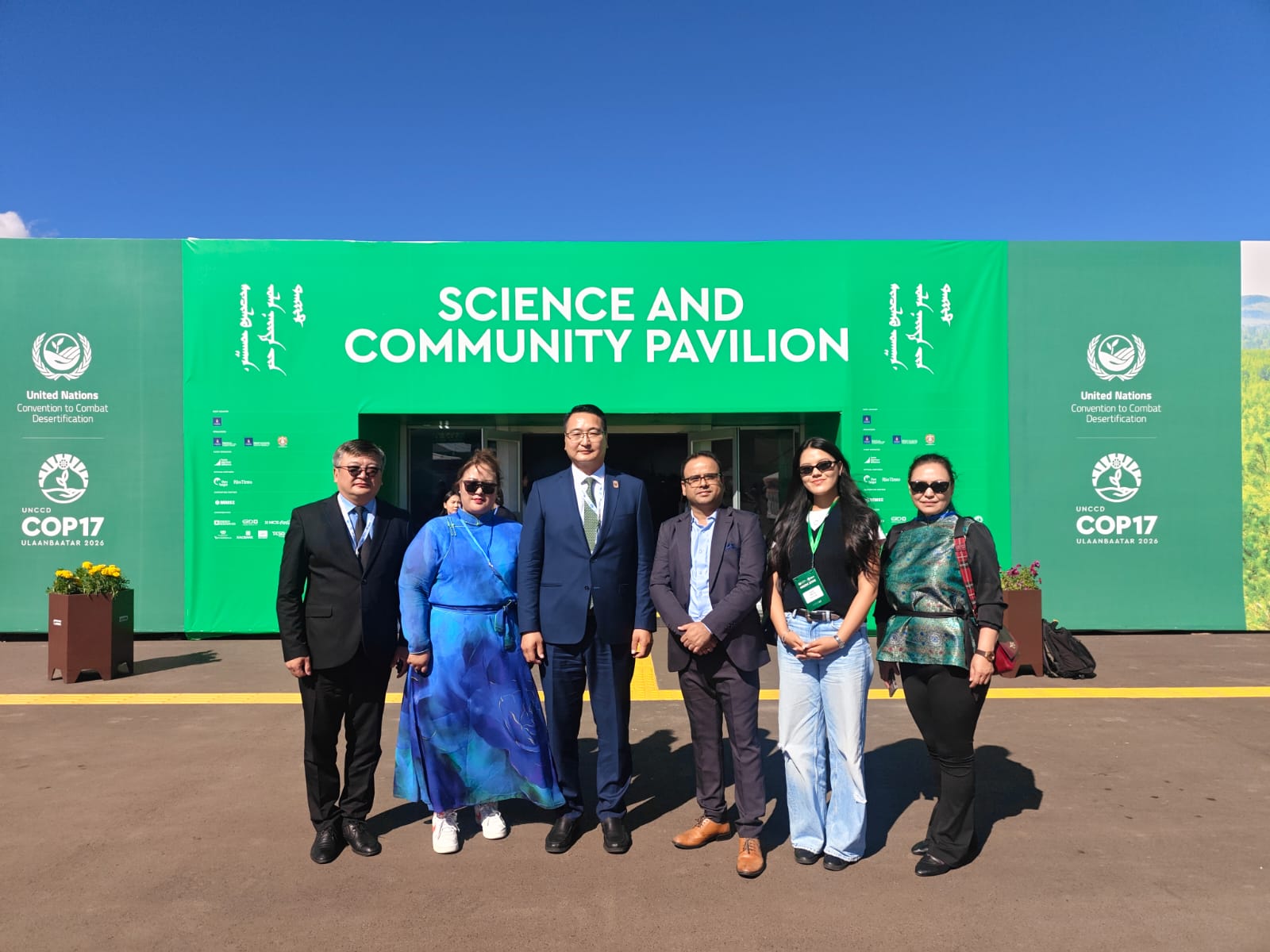
Mr. Pathak has arrived in Ulaanbaatar ahead of the session. A few moments from the COP17 venue:

Follow the Session
The session takes place on Wednesday, 26 August 2026, from 12:00 to 13:30, in Tsagaadai Hall, Green Zone, at the UNCCD COP17 venue in Ulaanbaatar. Delegates attending COP17 are warmly invited to join in person.
For everyone else, NatWorks will be reporting from Ulaanbaatar throughout the week. Follow our channels and check back on this site for photographs, key takeaways and reflections from the panel — and for what comes next, as the conversations begun at COP17 turn into the partnerships and projects of the years ahead. From Egypt's mangroves to Mongolia's rangelands, the work continues — and the world is watching.